
I remember standing in my backyard, coffee in hand, wondering, what is the longest range baby monitor? The baby was napping, the house was quiet, and I needed a monitor I could trust—no dropouts, no guessing. After testing different setups and digging into how far of a range baby monitors actually have, I learned that real-life range looks very different from what the manufacturer prints on the box. Some monitors work long distance with ease, while others struggle once walls, mid layers, or air purifiers get in the way. If you’ve ever worried about hearing your infant during a workday or while stepping outside, this guide will help you choose a baby monitor with great range—without the stress.
Why Baby Monitor Range Matters More Than You Think
Baby monitor range matters because real life rarely happens in one room. I learned this the first time I stepped into the backyard to grab fresh air and realized the monitor signal dropped before I even reached the garage. On paper, the range looked huge. In real life, walls, doors, and distance told a different story.
Advertised range and real-life range are not the same thing. Most manufacturers test monitors in open space with no walls, no floors, and no interference. Inside a home, mid layers like drywall, insulation, and even metal appliances quietly shrink that range fast.
Background noise and electronics also reduce reliability. Air purifiers, routers, and quieting devices can interfere with signals, even when the baby is sleeping peacefully. When a baby is crying, delays matter, and that’s when weak range becomes stressful.
For working parents, reliable range equals peace of mind. Whether you’re on a workday call, folding laundry, or stepping outside for a minute, a monitor with great range lets you move freely without anxiety.

How Far of a Range Do Baby Monitors Have? (Advertised vs Real Use)
Most baby monitors claim 800 to 1,000 feet, but real indoor range is much shorter. In typical homes, usable range often drops to 150–300 feet once walls and floors are involved. That’s enough for many homes, but not all.
Outdoor range looks better than indoor range. In a backyard or driveway, signals travel farther because there are fewer obstacles. Indoors, every wall quietly cuts strength.
Understanding this gap helps you choose smarter. Knowing how far of a range baby monitors actually have prevents disappointment and missed alerts.
Typical Range by Monitor Type
Audio-only monitors usually have the longest and most stable range. They use simpler signals and push farther through walls with fewer dropouts. This makes them great for large homes and overnight use.
Video baby monitors offer visuals but trade some range for data. A baby cam or baby camera sends more information, which makes it more sensitive to interference. That’s why video range often feels shorter indoors.
Wi-Fi monitors don’t have a distance limit—but they depend on internet quality. If your Wi-Fi is strong, you can check in from anywhere. If it’s weak, range problems show up fast.
What Affects Range Inside a Home
Whole-room coverage is easier than room-to-room coverage. Staying on the same floor usually works better than moving across levels. Floors are tougher barriers than walls.
Mid layers reduce signal strength more than people expect. Insulation, concrete, and metal framing quietly block signals, even in newer homes. Older homes with thick walls can be worse.
Other devices can interfere with baby monitors. Routers, air purifiers, and white-noise machines compete for space and reduce clarity. Placement matters more than brand here.
Do Baby Monitors Work Long Distance?
Yes, baby monitors can work long distance—but only with the right setup. The type of monitor matters more than the price tag. Knowing the limits helps you avoid false confidence.
Non-Wi-Fi Monitors (FHSS / DECT)
Non-Wi-Fi monitors are usually more reliable inside homes. They create a direct link between the baby unit and parent unit, which avoids internet drops. That’s why they shine during workdays.
They work well in basements, garages, and backyards. As long as you stay within tested range, the connection stays steady. Once you exceed it, they disconnect cleanly instead of lagging.
The limit is physical distance. When you go too far, the signal stops—there’s no remote access beyond the home.
Wi-Fi Baby Monitors
Wi-Fi baby monitors offer unlimited range in theory. If your internet is solid, you can check your baby from work, travel, or another state. Distance itself isn’t the limit.
Internet quality becomes the weak link. Slow uploads, router placement, or outages can cause delays or freezes. That’s frustrating when timing matters.
Wi-Fi makes sense for travel or shared caregiving. If multiple caregivers need access, Wi-Fi offers flexibility traditional monitors can’t.
What Is the Longest Range Baby Monitor in Real Homes?
The longest range baby monitor is the one that holds a signal through walls, not open fields. Real homes reward stability over bold numbers. That’s where experience matters more than specs.
Long-Range Baby Monitor Top Picks (Real-World Tested)
HelloBaby stands out for strong indoor signal strength. It holds up well through walls and works reliably in the backyard. That consistency matters more than flashy features.
Babysense video monitors balance range and clarity. The connection stays stable, and temperature monitoring adds reassurance when you’re farther away. It feels dependable during naps.
VTech performs well in multi-room homes. The range stays consistent across floors, which is key for larger layouts. It’s a solid, predictable choice.
Panasonic baby monitors excel in audio clarity. Clear sound travels farther with fewer drops. That makes them great for listening during quiet nights.
Blifforganic offers a packable, travel-friendly option. While compact, it still delivers reliable coverage for smaller homes and temporary setups.
Battery Life and Range — Why 5000mAh Actually Matters
Battery life directly affects how reliable range feels. A weak battery reduces signal strength before it dies completely. That’s when dropouts start.
Charging overnight becomes part of the system. Monitors with a 5000mAh battery last longer through busy workdays and evenings. You worry less about sudden silence.
Long range fails when power runs out. Even the best signal means nothing if the parent unit dies mid-day. Battery capacity quietly supports range reliability.
Range Use Cases Parents Actually Ask About
Will It Work in the Backyard?
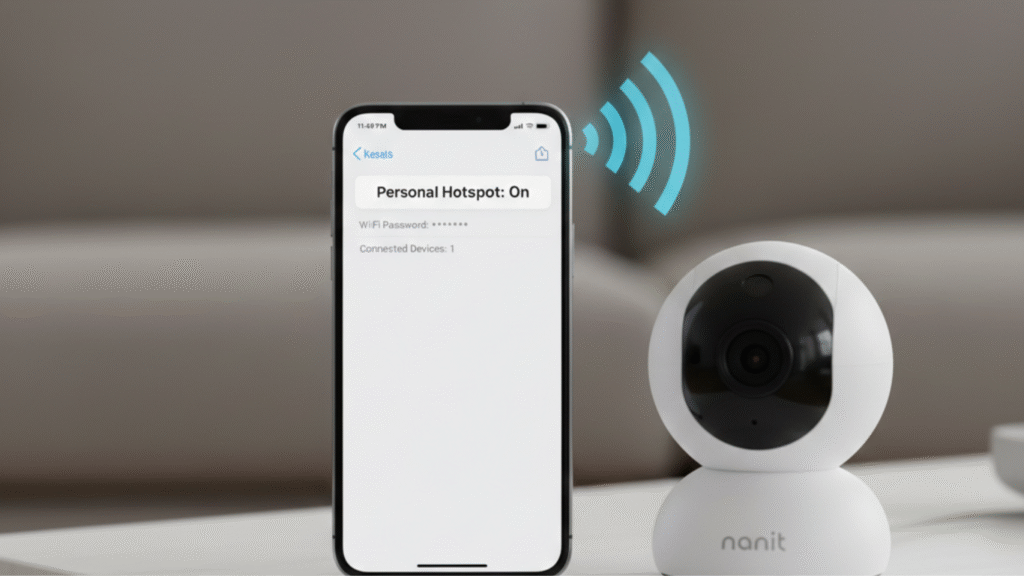
Yes, most long-range baby monitors work in the backyard, but distance and walls matter. In my experience, stepping outside feels safe until one wall turns into two, and suddenly the signal weakens. Outdoor air helps signals travel, but doors, brick, and insulation still slow things down.
Backyard range depends on what’s between you and the baby. A clear line through a window works better than thick walls or metal doors. Even quiet outdoor noise can mask alerts, which is why strong audio matters when the baby is crying.
The best test is a real walk-around. I always carry the parent unit outside once before trusting it. If it works there, it usually holds during everyday use.
Can I Move Freely While My Baby Is Sleeping?
Yes, with the right monitor, you can move freely around your home. I cook, answer emails, and even step into the garage without worrying when the range is solid. The key is stable room-to-room coverage.
Kitchens and garages are tougher than bedrooms. Appliances, concrete, and tools interfere more than people expect. Upstairs works better than basements in most homes.
Whole-room monitoring feels different than spot checks. A monitor with great range lets you live normally instead of tiptoeing. That freedom is what parents value most.
Temperature Monitoring and Long-Range Reliability
Temperature monitoring matters more when you’re farther away. When you can’t peek in, knowing the room isn’t too hot or cold brings real peace of mind. It’s a quiet safety net.
Accuracy is more important than instant updates. Most sensors lag slightly, but consistency matters more than speed. A steady reading helps you trust the data.
Comfort equals better sleep for everyone. When your infant stays comfortable, naps last longer and nights feel calmer. That confidence grows when the monitor stays connected.
Common Long-Range Baby Monitor Mistakes
The biggest mistake is trusting the advertised range. Those numbers assume open space with no walls. Real homes shrink that range fast.
Placing the parent unit near routers causes interference. Wi-Fi signals compete and weaken clarity. A few feet of distance makes a big difference.
Ignoring background noise filters reduces usability. Monitors that don’t quiet background noise make it harder to hear important sounds. Clear audio matters more than volume.
Not testing range before relying on it causes stress. I always test during the day, not at midnight. A simple walk-through prevents late-night panic.
FAQs About Long-Range Baby Monitors
What is the longest range baby monitor available today?
The longest range baby monitors are non-Wi-Fi models rated up to 1,000 feet in open space. In real homes, the best ones hold a strong signal through walls and floors. Learn more about real-world testing below.
Do baby monitors work long distance without Wi-Fi?
Yes, many baby monitors work long distance without Wi-Fi using FHSS or DECT signals. They connect directly to the parent unit and are often more stable indoors. Learn more about non-Wi-Fi options.
How far of a range do baby monitors actually have?
Most baby monitors advertise 800–1,000 feet, but real indoor range is closer to 150–300 feet. Walls, floors, and appliances reduce signal strength fast. Learn more about range limits here.
Can I use a baby monitor across floors or outside?
Yes, many monitors work across floors and in the backyard, but performance depends on walls and materials. Upper floors usually work better than basements. Learn more about real-life use cases.
Does long range affect sound or video quality?
Longer range can slightly reduce video quality, but good monitors keep audio clear. Sound usually travels farther than video and stays reliable. Learn more about audio vs video range differences.
Final Thoughts — Choosing a Baby Monitor With Great Range
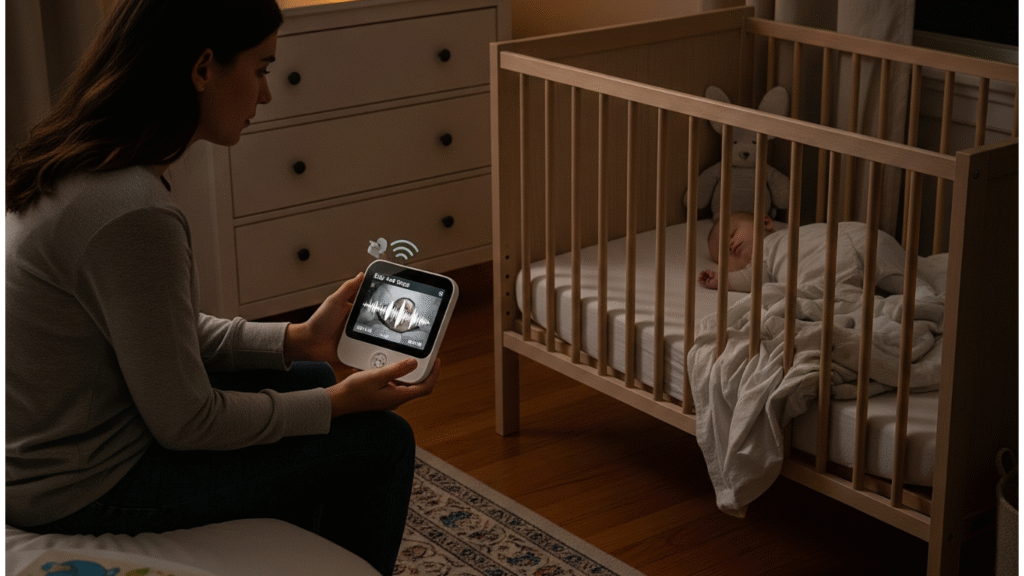
A long-range baby monitor means stable sound and video where you actually live. It’s not about the biggest number on the box. It’s about hearing your baby clearly through walls, floors, and everyday noise without guessing.
The best choice depends on your lifestyle and space. Apartment living needs less range than a house with a backyard. Think about where you move during the day, not where you hope the monitor works.
Always test the range before relying on it overnight. I do a simple walk-through during the day and listen for dropouts. That small step prevents late-night stress.
If you want deeper help, explore comparisons and setup guides. They make choosing easier and help you get the most from your monitor. A little prep goes a long way toward peaceful sleep—for you and your baby.
Pingback: Baby Monitor Making Crackling Noise While Sleeping (What It Means & How To Fix It) - Moms Pal