
I remember lying awake at 2 a.m., stacking regular pillows around me and still feeling that dull back pain. That’s when I started researching the types of pregnancy pillows, hoping one good sleep pillow could finally help me rest.
As my belly grew, I realized not all pillows work the same. A U shaped pregnancy pillow feels very different from a C shaped pregnancy design or even a simple wedge. The right shape can ease hip strain, support your bump, and help you sleep on your side with less pain.
In this guide, I’ll break down the main types, from U-Shaped Pregnancy Pillows to Wedge Pregnancy Pillows, and answer questions like which shape of pregnancy pillow is best and when should I start using a pregnancy pillow. If you’re searching for the best pregnancy pillow for real comfort, you’re in the right place.
Why Pregnancy Pillows Are a Game-Changer for Sleep
Regular pillows stop working during pregnancy because your body changes fast. Your belly grows, your hips shift, and your lower back feels tight. A flat pillow cannot support all those new curves at once. The short answer: standard pillows are not built for a pregnant body.
Pregnancy pillows are designed to support your whole frame, not just your head. They help reduce back pain by keeping your spine in a neutral line. When your spine stays straight, pressure drops and muscles relax. The short answer: better alignment means less pain at night.
They also support hip alignment, which matters more than most people think. When your top leg drops forward, it twists your lower back. A sleep pillow between the knees keeps your hips stacked. The short answer: aligned hips protect your lower back.
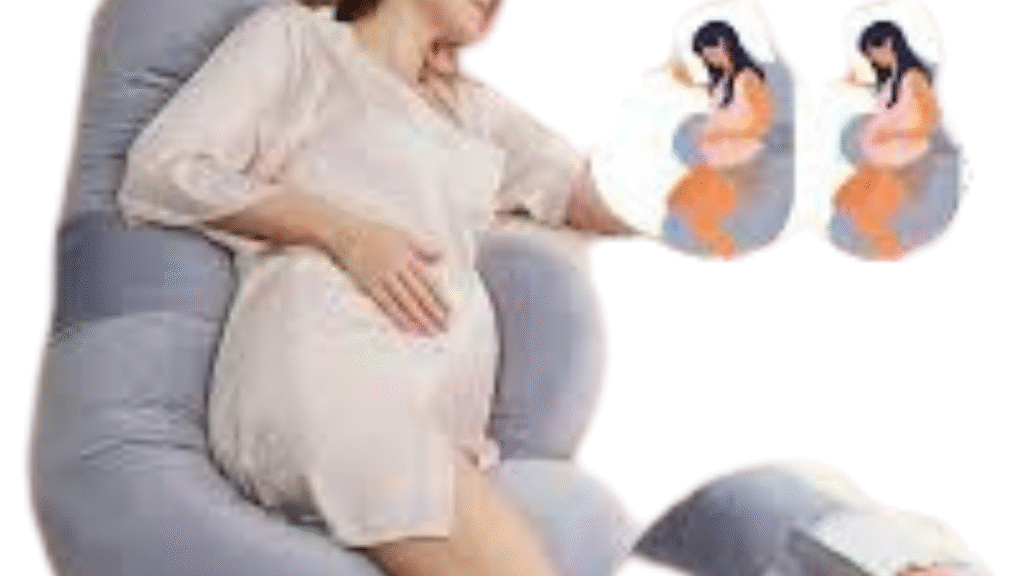
Belly support is another big win. As your bump grows, gravity pulls it down when you lie on your side. A U shaped pregnancy pillow or C shaped pregnancy pillow holds your belly gently, like a soft hammock. The short answer: lifting the bump eases strain on ligaments.
Sciatic nerve pressure can flare up in the second and third trimester. I felt a sharp ache down my leg some nights, and it was hard to ignore. A well-placed wedge or full-body pillow cushions the hips and reduces nerve pressure. The short answer: targeted support can calm sciatic pain.
When should I start using a pregnancy pillow? Most experts suggest between 12–20 weeks, or earlier if discomfort begins. I started around week 16 when sleep became restless. The short answer: start as soon as your body asks for extra support.
Main Types of Pregnancy Pillows (Complete Breakdown)
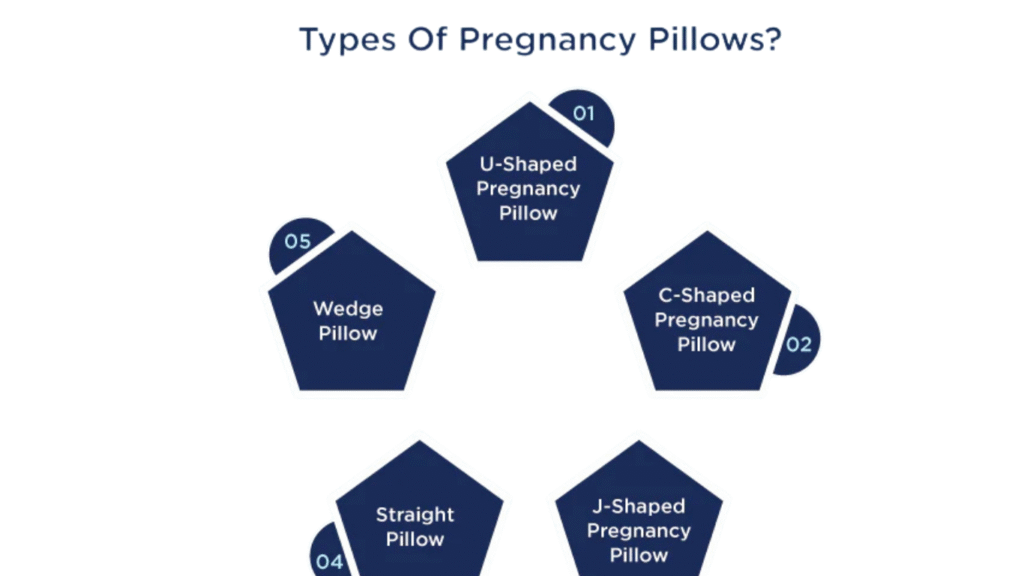
There are several types of pregnancy pillows, and each shape feels different. The right one depends on your sleep style, bed size, and level of back pain. Below, I’ll break them down simply so you can see what fits your needs best. The short answer: shape determines support level and space needed.
U-Shaped Pregnancy Pillows
A U shaped pregnancy pillow wraps around both sides of your body. It supports your head, back, belly, hips, and knees at the same time. U-Shaped Pregnancy Pillows are known for full-body comfort. The short answer: this is maximum support in one piece.
Pros:
- Supports back, belly, hips, and knees
- Great for back sleepers learning to sleep on their side
Ideal for third trimester
Cons:
- Takes up space
- Can feel bulky in smaller beds
Best For:
- Severe back pain
- Toss-and-turn sleepers
- Best for third trimester comfort
From my experience, this felt like sleeping in a soft nest. If space is not an issue, it gives steady support all night. The short answer: best for full-body relief.
C-Shaped Pregnancy Pillows
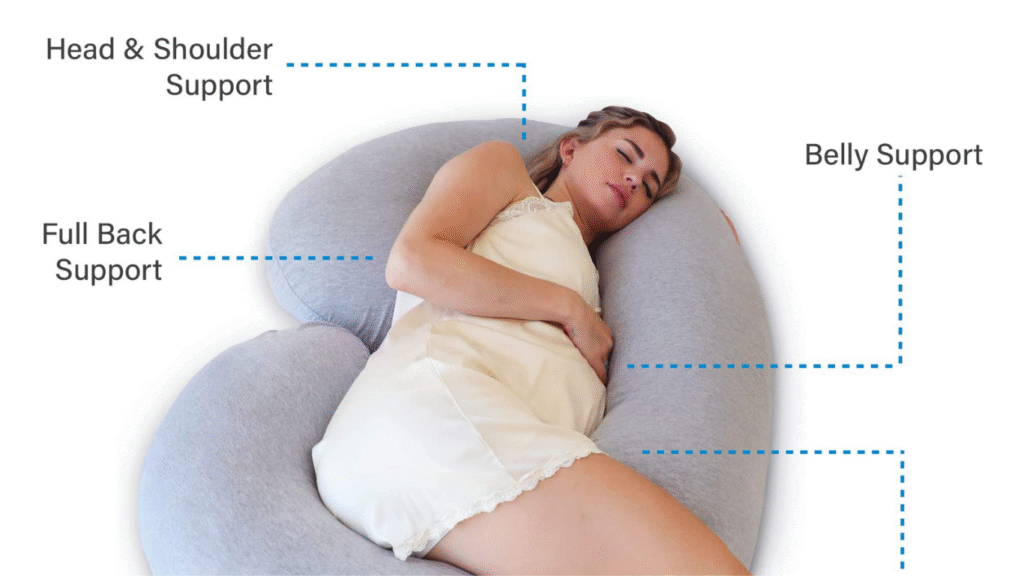
A C shaped pregnancy pillow curves around your body like a gentle hug. C-Shaped Pregnancy Pillows support your head, belly, and knees, while the bottom curve rests near your back. The short answer: balanced support with less bulk.
Pros:
- Excellent back and belly support
- More compact than U-shape
- Easier to reposition
Cons:
- Does not support both sides at once
Best For:
- Back pain
- Moderate space bedrooms
I switched to a C shaped pregnancy design when I wanted more room in bed. It still eased my hip pain but felt lighter. The short answer: good support without taking over the bed.
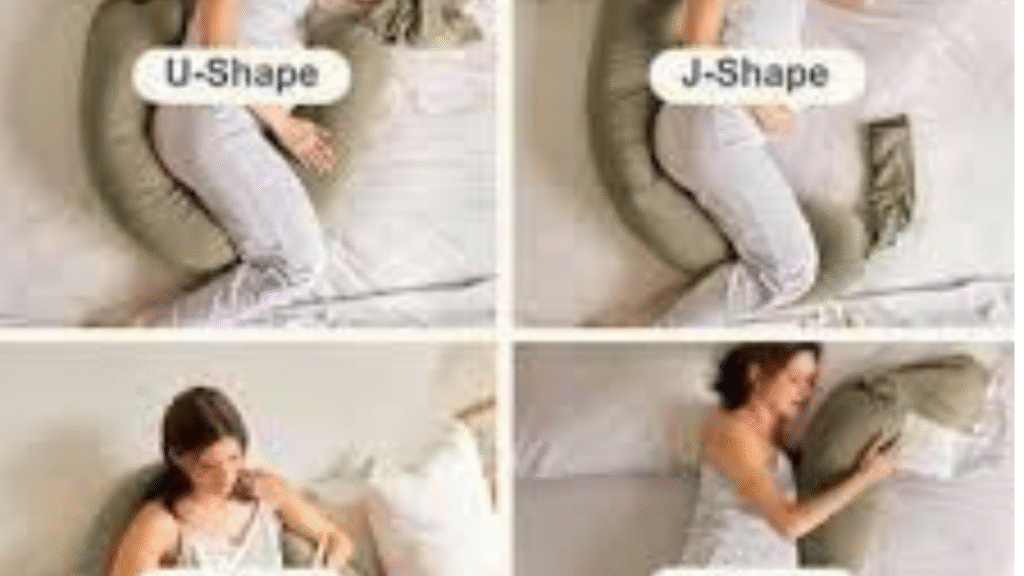
J-Shaped Pregnancy Pillows
If you’re wondering which pregnancy pillow shape is best, U or J, here’s the simple truth. A J-shaped pillow is a slimmer version of the U. It supports your head and belly but offers less back coverage. The short answer: lighter support in a compact shape.
Pros:
- Lightweight
- Space-saving
- Good belly and head support
Cons:
- Limited back support
Best For:
- Small beds
- Minimal support needs
This shape works well if you do not struggle with strong back pain. The short answer: ideal for mild discomfort and tight spaces.
Wedge Pregnancy Pillows
A wedge is a small, firm cushion placed under the belly or behind the back. Wedge Pregnancy Pillows are simple but effective. The short answer: targeted support without full-body bulk.
Pros:
- Affordable
- Travel-friendly
- Great for targeted back or belly pain
Cons:
- Not full-body support
Best For:
- Early pregnancy
- Spot-specific pain relief
Among types of pregnancy pillows for back pain, a wedge works well for lower back pressure. I liked using one on the couch for quick relief. The short answer: small size, focused comfort.
Full-Length / I-Shaped Pillows
Full-Length/I-Shaped Pillows look like long body pillows. They support your head and legs in a straight line. The short answer: simple design with light alignment support.
Best For:
- Minimalist sleepers
- Light hip alignment support
They are easy to move and store. But they do not hug the body like U or C shapes. The short answer: good basic support, not maximum cushioning.
Inflatable Pregnancy Pillows
Inflatable pregnancy pillows use air for adjustable firmness. You can change the feel by adding or releasing air. The short answer: flexible and portable support.
Best For:
- Stomach relief
- Temporary use
- Travel
They are not as plush as foam-filled pillows, but they are easy to carry. The short answer: convenient but not luxury-level comfort.
Which Shape of Pregnancy Pillow Is Best?
The best shape depends on your sleep style and pain level. U-shaped pillows provide full support, C-shaped pillows balance comfort and space, and wedges work for targeted relief. The short answer: match the shape to your pain and bed size.
Shape | Best For | Space Needed | Back Pain Relief |
U-Shaped | Full-body support, third trimester | Large | High |
C-Shaped | Balanced comfort | Medium | Medium–High |
J-Shaped | Small beds | Small | Medium |
Wedge | Spot pain relief | Very Small | Targeted |
If you move a lot at night, U-shaped pregnancy pillows may feel best. If you share a bed, a C shaped pregnancy pillow may be more practical. The short answer: comfort is personal.
Is a C-Shaped or U-Shaped Pregnancy Pillow Better?
A U shaped pregnancy pillow offers support on both sides. A C shaped pregnancy pillow supports one side at a time but takes less space. The short answer: U for maximum support, C for balance.
In my third trimester, I preferred the U-shape because my back pain increased. Earlier on, the C-shape felt easier to manage. Budget also matters, as U-shaped pillows are often larger and slightly more expensive. The short answer: choose based on trimester, space, and pain level.
Which Pregnancy Pillow Shape Is Best, U or J?
If you need full back support, choose U. If you want something slimmer, choose J. The short answer: U for strong support, J for light comfort.
Avoid J-shape if you struggle with sciatica or lower back pain. In that case, extra support is worth the bulk. The short answer: more pain needs more structure.
Types of Pregnancy Pillows for Back Pain
Spinal alignment matters because your center of gravity shifts during pregnancy. When your spine curves too much, muscles strain overnight. The short answer: aligned spine equals less back pain.
Ranked for back pain relief:
- U-shaped pregnancy pillow
- C-shaped pregnancy pillow
- Wedge for targeted lower back pain
To use them properly, sleep on your left side. Place the pillow between your knees and under your belly. Keep your back supported to avoid twisting. The short answer: side sleeping with support reduces strain.
FAQs
What are the different types of pregnancy pillows?
The main types of pregnancy pillows are U-shaped, C-shaped, J-shaped, wedge, full-length, and inflatable. Each offers different support for back pain and belly comfort. Learn more above.
Which shape of pregnancy pillow is best?
The best shape depends on your sleep style and pain level. U-shaped pillows give full support, while C-shaped balance comfort and space. Explore the full comparison above.
Is a C-shaped or U-shaped pregnancy pillow better?
A U-shaped pregnancy pillow supports both sides of your body. A C-shaped pregnancy pillow saves space but supports one side at a time. See which fits your bed and trimester.
Which pregnancy pillow shape is best, U or J?
Choose U-shaped for strong back support and third trimester comfort. Pick J-shaped if you want a slimmer pillow for a small bed. Read more to match your needs.
When should I start using a pregnancy pillow?
Most people start using a pregnancy sleep pillow between 12–20 weeks, or earlier if pain begins. Start when sleep feels hard. Get full timing tips above.
Are pregnancy pillows worth it?
Yes, pregnancy pillows can ease back pain, support your belly, and improve sleep quality. Many find better rest with the right shape. Discover how to choose yours.
Final Thoughts: Choosing the Right Pregnancy Pillow for Your Body
The truth is simple: the best choice from all the types of pregnancy pillows is the one that feels right to your body. Every pregnancy is different. What worked for my back pain may not be what your hips need. The short answer: comfort is personal.
Listen to your body like you would listen to a close friend. If you wake up sore, your pillow may not be giving enough support. If you feel crowded in bed, the size may be wrong. The short answer: your sleep quality is your best guide.
In my third trimester, I needed more support than I did at 16 weeks. That shift is normal because your center of gravity changes as your belly grows. Research shows side sleeping with proper alignment reduces strain on the spine and hips. The short answer: your needs will grow as your bump grows.
If you are still unsure which shape is best, take a moment to compare features, sizes, and real reviews. Look at how a U shaped pregnancy pillow differs from a C shaped pregnancy pillow in space and support. The short answer: compare before you buy.
Sleep during pregnancy can feel like chasing a moving target. But the right sleep pillow can feel like a steady anchor at night. Explore top-rated options, read honest feedback, and choose what fits your bed and your body. You deserve deep, peaceful rest.