
I remember asking myself in the middle of my second trimester, “Can I use a pregnancy pillow to lay on my stomach?” As a lifelong belly sleeper, switching to side sleeping felt like trying to sleep on a stranger’s couch. Over the years — and through a couple of pregnancies — I’ve tested every pillow shape, from U-shape to wedge, to see what actually works. In this guide, I’ll share what’s safe, what’s comfortable, and how to find the correct position for your pregnancy pillow so you can finally get some rest.
Can I Use a Pregnancy Pillow to Lay on My Stomach?
I’ve always been a belly sleeper. Even in my first pregnancy, I held on to that habit like a favorite old sweater. Then my bump grew, and it felt like I was trying to nap on a basketball.
That’s when I looked into pregnancy pillows. Over the years, I’ve tried them all — U-shapes, wedges, and more. Here’s what I found. Yes, you can lay on your stomach with a pregnancy pillow. But it must be the right type, like an inflatable Cozy like an inflatable Cozy Bump that supports your bump without pressure .Bump. And you should only do it if your doctor says it’s safe.
Most pregnancy pillows are for side sleeping, not stomach lying. Special designs have dips or cut-outs. These support your belly without pressing on it. That helps with comfort and blood flow.
If you want to try belly lying, get a pillow made for it. Always check with your healthcare provider first.
Your body, your baby, and your comfort all matter. The right pillow can make belly-style rest possible again. But safety comes first — so wait for your provider’s approval before making it a habit.
Why Stomach Sleeping Can Be Tricky During Pregnancy
In early pregnancy, stomach sleeping is usually safe — at least for most people in the first trimester. I remember still flopping down on my belly in those first weeks without a second thought. Your bump isn’t big yet, so the main “risk” is comfort, not safety. But even then, some women notice breast tenderness or bloating that makes lying face-down less cozy.
By the second trimester, your belly growth makes stomach lying uncomfortable. For me, it felt like trying to balance on a soft balloon — and it just wasn’t working. This is when many belly sleepers start switching to side positions or using special pillows. You can still lie on your stomach with a pregnancy pillow that has a cut-out for your bump, but it takes the right design to make it work.
In the third trimester, stomach lying can put pressure on your belly and reduce circulation. That’s why most experts recommend avoiding it unless you have a pillow made for the job. Specialized designs, like the Cozy Bump, support your body while keeping weight off your bump. Yes, you can lie on your stomach while pregnant in the 3rd trimester — but only for short periods and only with proper support.
As for how long you can lie on your tummy while pregnant, it depends on comfort and circulation. Even with a pillow, I found 20–30 minutes was my limit before my back or hips started complaining. Always listen to your body, and check with your healthcare provider if you’re unsure. Safety first, comfort second — in that order.
What Is the Correct Position for a Pregnancy Pillow?
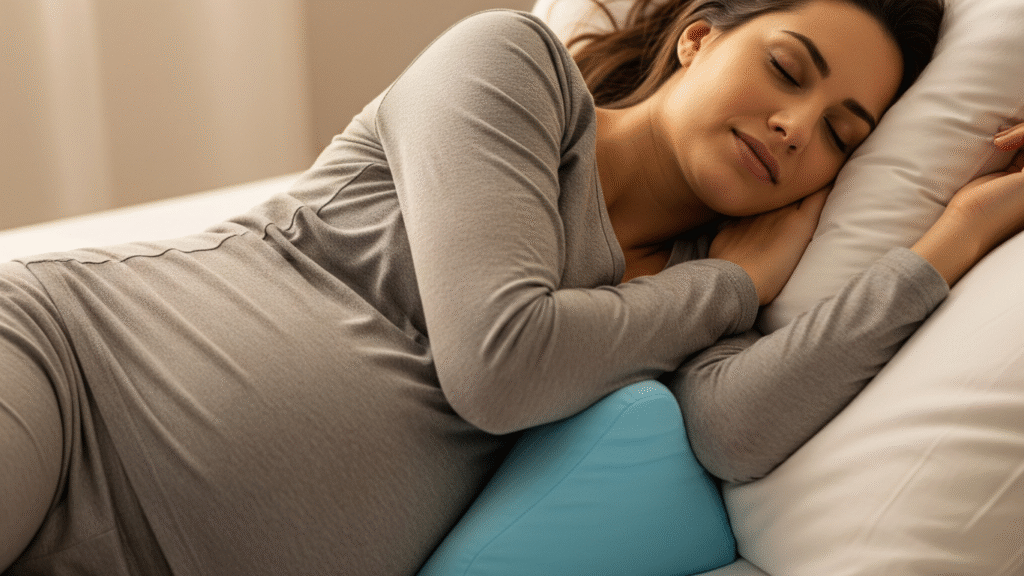
The best position for most side sleepers is on your left side with the pillow supporting your belly, back, and knees. This helps blood flow to your baby and reduces swelling. I learned this after weeks of tossing between sides — my left side felt like a gentle hug, my right side not so much. Your pillow should fill the space between your knees and cradle your bump so your back doesn’t twist.If you’re a side sleeper, you can read my article here: Which Shape Pregnancy Pillow Is Best for Side Sleepers? My Honest Take After Trying U, C, J, and More.
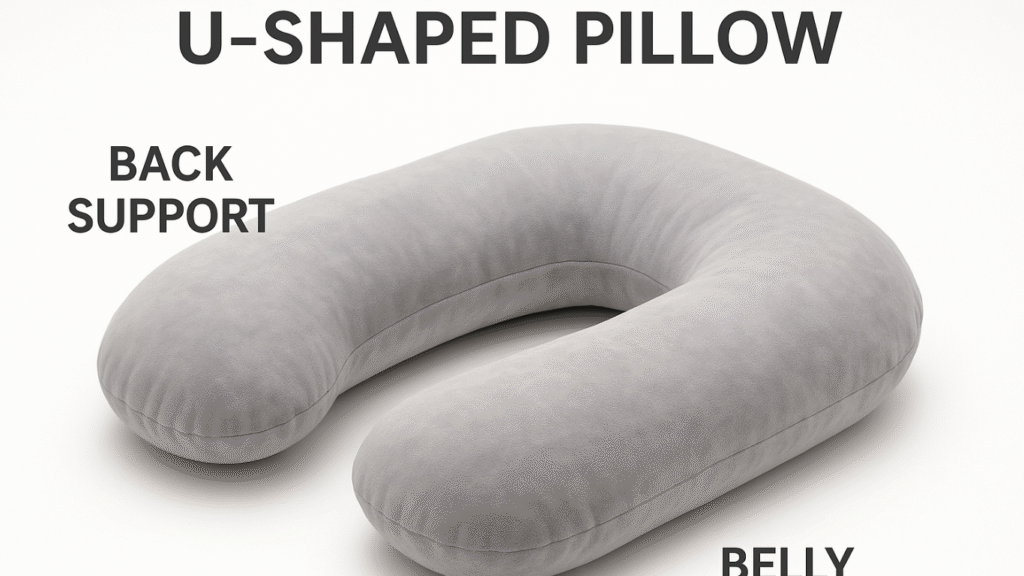
With a U-shape pregnancy pillow, wrap one side behind your back and the other under your belly. I used mine like a cozy nest — one arm over, one leg tucked in. This kept my hips in line and stopped me from rolling onto my back at night. If you’re wondering how to sleep with a pregnancy pillow U-shape, think of it as a big, supportive letter “U” hugging both your front and back.
A C-shape pillow works best when you curve it along your back and between your knees. I loved this when I wanted belly space but still needed support behind me. For how to sleep with a pregnancy pillow C-shape, hug the top curve and rest your legs over the lower curve — it keeps everything aligned without extra bulk.
The J-shape is perfect for small spaces or lighter support. Slide the long side between your knees and rest your belly over it. I used this on nights I felt too warm for a full wraparound. For side sleepers, this style still gives hip and belly comfort without crowding the bed.
If you want compact support, a wedge pillow or Boppy Side Sleeper is great. Place it under your belly to relieve pulling, or behind your back to stop rolling. This is ideal for travel or if you don’t want a giant pillow in your bed. Wedges are small but mighty — especially for late-pregnancy comfort.
For visual learners, diagrams or quick photos make setup easier. Seeing exactly where the pillow should go can save you from trial and error. I wish I had them my first time — it would have spared me from accidentally sleeping half-off my pillow all night.
Pregnancy Pillow Shapes and Their Best Uses
C-Shape
A C-shape pillow supports your back, knees, and neck while giving your belly space. I used this during my second pregnancy when I still wanted room to sprawl. You hug the top curve, rest your legs over the bottom, and let the middle cradle your back. For how to sleep with a pregnancy pillow C-shape, think of it like curling into a cozy hammock — but without the swaying.
U-Shape
A U-shape pillow wraps around your whole body, giving support to both your back and belly at the same time. I relied on this when hip pain kept me up at night. One side went behind my back to stop rolling, the other tucked under my belly for lift. For how to sleep with a pregnancy pillow U-shape, picture yourself in the middle of a giant, supportive hug — one that never lets go.
If I have to choose between U-shape pillows, I wrote Momcozy vs Boppy Pregnancy Pillow: My Honest Comfort Test, where I compared the two.
J-Shape
A J-shape pillow is a minimalist version that still supports your belly and knees. I used this when we needed more bed space for my husband and our clingy cat. The long side slips between your knees, while the curve tucks under your belly or head. It’s perfect for side sleepers who want support without the bulk.
Wedge Pillow
A wedge pillow is small, portable, and great for targeted belly or back support. I kept one in the living room for naps and even took it on trips. For wedge pillow comfort, slide it under your bump to ease pulling or behind your back to stop rolling. It’s the “pocket knife” of pregnancy pillows — small, versatile, and always useful.
Stomach-Sleeping Pillows
Stomach-sleeping pillows, like the Cozy Bump, let you lie face-down by creating space for your bump. I tried one during my third trimester when I craved that familiar belly-down nap. The center cut-out kept weight off my bump, while the rest of the pillow supported my hips and chest. For short rest periods, it felt like reconnecting with my old sleep style — without the safety worries of lying flat on the bed.
My Experience Using a Pregnancy Pillow for Stomach Lying
Yes, I’ve used a Cozy Bump pillow to lie on my stomach during pregnancy — and it can be a game-changer. I first tried it in my third trimester, when my back was screaming and my hips felt like they were in a tug-of-war. The center cut-out let my bump rest weight-free, while my chest and hips stayed supported. It was the first time in months I felt like “me” again in my sleep.
The biggest benefit was relief from back pain and pressure. Lying face-down took the strain off my spine, almost like a gentle stretch without moving. I could breathe deeply, my belly felt safe, and my body finally let go of the tension I’d been carrying. For belly sleepers, it’s like slipping back into your favorite chair after a long day — familiar and instantly soothing.
There are challenges, though, and they’re worth knowing before you buy. The pillow is bulky, so storage can be tricky unless you have closet space. Inflatable versions have a vinyl smell at first, and they’re not ideal for every position — mostly just stomach lying and short naps. I also found setup a little fussy when I was half-asleep.
If you’re plus size, finding the right fit matters. Some stomach-sleeping pillows have a smaller cut-out, which can press on your bump or hips. Look for designs with extra room and adjustable air levels if inflatable. Comfort isn’t just about lying face-down — it’s about having space to move and relax without feeling squeezed.
When Should I Start Using a Pregnancy Pillow?
Most moms start using a pregnancy pillow in the second trimester. But you can begin earlier if you need comfort. For me, it was around 18 weeks. My hips started to ache, and my belly began to pull forward at night. That extra support turned my nights from tossing until 2 a.m. into waking up rested.
The first sign you might need one is when lying flat feels unbalanced. I remember stacking regular pillows under my bump, behind my back, and between my knees. By morning, they were on the floor. That’s when I knew a pregnancy pillow wasn’t a luxury — it was a fix.
You don’t have to wait until pain gets bad. Even in early pregnancy, a pillow can prevent hip pain and help keep your body straight. It’s like breaking in comfy shoes before a long trip — you’ll be glad you did when the strain kicks in.
Every pregnancy is different, so let your body set the pace. If you’re sleeping well without one, that’s fine. But if you notice back pain, hip soreness, or belly strain, it’s time. The earlier you start, the more your body will thank you later.
Even though I’m not pregnant, a pregnancy pillow is incredibly useful — you can read about my experience here: Why I Use a Pregnancy Pillow (and I’m Not Pregnant): The Sleep Hack You Didn’t Know You Needed.
Special Features to Look For
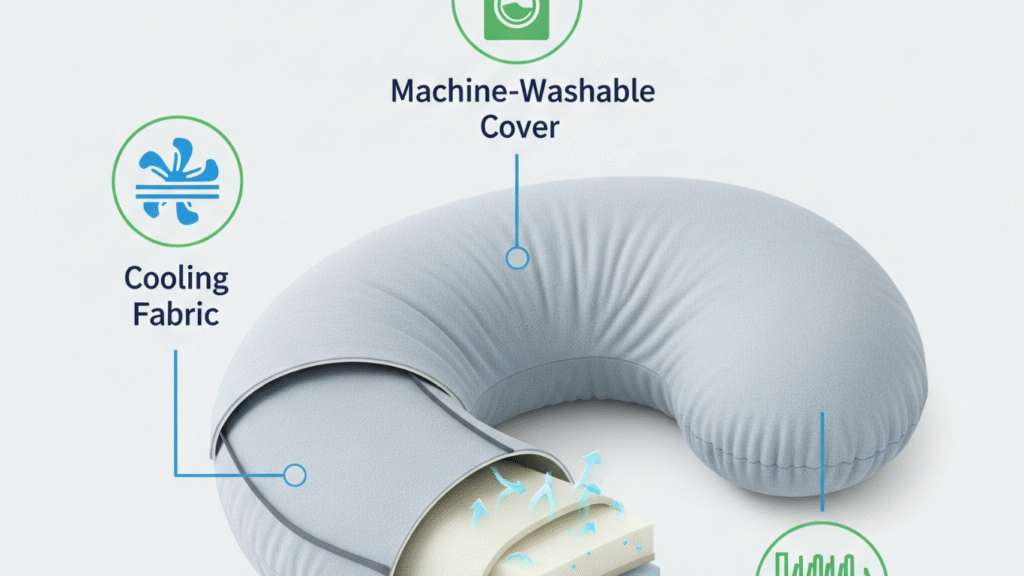
When you’re choosing a pregnancy pillow, little details can make a big difference. I learned this after buying one that looked perfect online — until I realized the cover wasn’t removable. Let’s just say washing a giant pillow in the bathtub at 10 p.m. is not my idea of fun. I loved a cooling pregnancy pillow during my summer pregnancy — it kept me comfortable all night, so small features really do matter.
Quick tip: Always check if the cover comes off and is machine-washable. It saves you time and keeps things fresh.
I used the Momcozy pillow for several weeks — and I wrote about my experience here: Is Momcozy Pregnancy Pillow Good? My Honest Review After Weeks of Use
Some pillows come with cooling or warming features, and they’re a game changer. During my summer pregnancy, I loved a pillow with a breathable, cooling fabric — it felt like sleeping on the “cold side” of the pillow all night. In winter, I switched to one that kept me warm without feeling stuffy.
Short answer: Cooling for summer, warming for winter — match the pillow to your season. I’ve tried both the Momcozy and PharMeDoc pillows — there’s a detailed comparison here: Momcozy vs PharMeDoc Pregnancy Pillow: My Surprising Sleep Breakthrough.
Adjustable firmness is another win, especially if you go for an inflatable design. I used one during my third trimester and could tweak the air level until my hips and belly felt weightless.
Pro tip: The right firmness means less tossing and more deep sleep.
If you have allergies or just want a cleaner sleep environment, look for hypoallergenic, organic, or chemical-free materials. Some pillows are free of phthalates, BPA, formaldehyde, and PVC — safer for you and your baby. I noticed I slept better when I wasn’t worried about breathing in harsh chemicals.
Simple rule: If you wouldn’t want it in your baby’s crib, don’t choose it for your pillow.
Portability is worth considering too. My U-shape pillow was amazing at home, but it hogged the whole bed and was impossible to travel with. On trips, I used a small wedge pillow that fit in my bag and still gave me belly support.
Bottom line: Big pillows are cozy, small ones are flexible — choose what fits your lifestyle.
For extra comfort, check if the pillow is breathable, odor-resistant, antibacterial, or even biodegradable. I once had a pillow that trapped heat and made me feel like I was sleeping in a sauna — never again.
Quick advice: Breathable fabric = better nights and less sweaty wake-ups.
When Should I Start Using a Pregnancy Pillow?
Most people start using a pregnancy pillow in the second trimester. But you can start earlier if you need comfort. For me, it was around 18 weeks. My hips began to ache. My belly started to pull forward at night. That extra support was the difference between tossing until 2 a.m. and waking up rested.
The first sign you might need one is when lying flat feels off balance. I remember stacking regular pillows under my bump, behind my back, and between my knees. But I always woke up with them on the floor. That’s when I knew a pregnancy pillow wasn’t a luxury. It was a solution.
You don’t need to wait for bad discomfort to start using one. Even in early pregnancy, it can help prevent hip pain and keep your body in line. It’s like breaking in comfy shoes before a long trip. You’ll be glad later.
Every pregnancy is different, so let your body decide. If you’re sleeping well without one, great. But if you notice back pain, hip soreness, or belly strain, it’s time. The earlier you start, the more your body will thank you.
When Should I Start Using a Pregnancy Pillow?
The first sign you might need one is when lying flat feels off. I remember propping regular pillows under my bump, behind my back, and between my knees. Yet I still woke up with them scattered on the floor. That’s when I knew a pregnancy pillow was not a luxury. It was a solution.
You don’t need to wait until it gets bad. Even in early pregnancy, a pillow can help prevent hip pain. It also keeps your body aligned. Think of it like breaking in comfy shoes before a long trip. You’ll enjoy it more when the real strain starts.
Every pregnancy is different. Let your body guide you. If you’re sleeping well without one, that’s fine. But if you notice back pain, hip soreness, or belly strain, it’s time. The earlier you start, the more your body will thank you later. If you’re ready to start, here’s a list of pregnancy pillows that work well from early to late pregnancy.
FAQs
Can I use a pregnancy pillow to lay on my stomach in the third trimester?
No, lying on your stomach isn’t safe in late pregnancy. A pregnancy pillow can help you rest on your side instead. Learn more about safe positions.
What is the safest sleeping position during pregnancy?
Sleeping on your left side improves blood flow and comfort for you and your baby. A pregnancy pillow makes this position easier to maintain.
When should I start using a pregnancy pillow?
You can start any time you feel discomfort, even in the first trimester. Many moms begin around 20 weeks as their bump starts to grow.
Can I use a wedge pillow instead of a full-body pillow?
Yes, a wedge pillow supports your bump or back. But a full-body pillow offers more all-around comfort during pregnancy. Learn which suits you best.
Which pregnancy pillow is best for plus-size moms?
U-shaped and adjustable full-body pillows give more room and support. Look for extra-long designs to match your body type and sleeping style.
Final Thoughts
Yes, you can use a pregnancy pillow for stomach lying — as long as it’s the right type and your doctor gives the green light. The key is to find a pillow designed to support your bump while keeping you comfortable and safe. Look for the shape and features that fit your sleep style, comfort needs, and current stage of pregnancy. The right pillow won’t just help you rest better — it can turn bedtime into something you actually look forward to.
Pingback: Newton Pregnancy Pillow Reviews: A Candid Look At Real Relief - Moms Pal