
If you’ve ever stepped into the yard, garage, or another floor of your house and felt that tiny spike of panic when the baby monitor cuts out, you’ve probably asked yourself what baby monitor has the longest range. I’ve been there—testing monitors in real homes, not perfect lab setups, and realizing fast that what the manufacturer promises isn’t always what parents get. Range matters for baby sleep, peace of mind, and even those quiet moments when you just want to breathe without hovering. In this guide, I’ll share what I’ve learned from using top long-range baby monitors—both Wi-Fi and reliable non-Wi-Fi options—so you know how far baby monitors really transmit. Stick with me, and I’ll help you find a monitor that actually works where you live, not just on the box.
How Far Do Baby Monitors Really Transmit?
Short answer: most baby monitors do not reach as far as the box claims, especially indoors.
I learned this the hard way while walking from the nursery to the garage and watching the signal drop. Understanding real range helps you choose the right baby cam for your home and baby sleep routine.

Advertised Range vs Real-Life Performance
Advertised range is tested outdoors, not in real homes.
When brands say a baby monitor reaches 1,000 feet, that number comes from open space with no walls, no Wi-Fi, and no interference. Think empty fields, not multi-story houses.
Indoor range is always shorter than outdoor range.
Inside a home, walls, floors, and doors eat up signal fast. In my experience, a monitor rated for 1,000 feet outdoors often works at just 150–300 feet indoors, especially in larger homes.
Interference quietly cuts range without warning.
Wi-Fi routers, microwaves, concrete walls, and even baby monitors from neighbors can weaken the signal. This is why reliable non-Wi-Fi monitors often perform better at night when everything else is running.
Featured snippet:
Most long-range baby monitors transmit between 800–1,000 feet in open space, but indoors the usable range is usually 150–300 feet.
Typical Baby Monitor Ranges Explained
Audio-only baby monitors usually go the farthest.
Because they don’t send video, audio monitors often reach longer distances. Some can pass through walls better, but you lose the peace of seeing your baby sleep.
Video monitors with FHSS or DECT balance range and clarity.
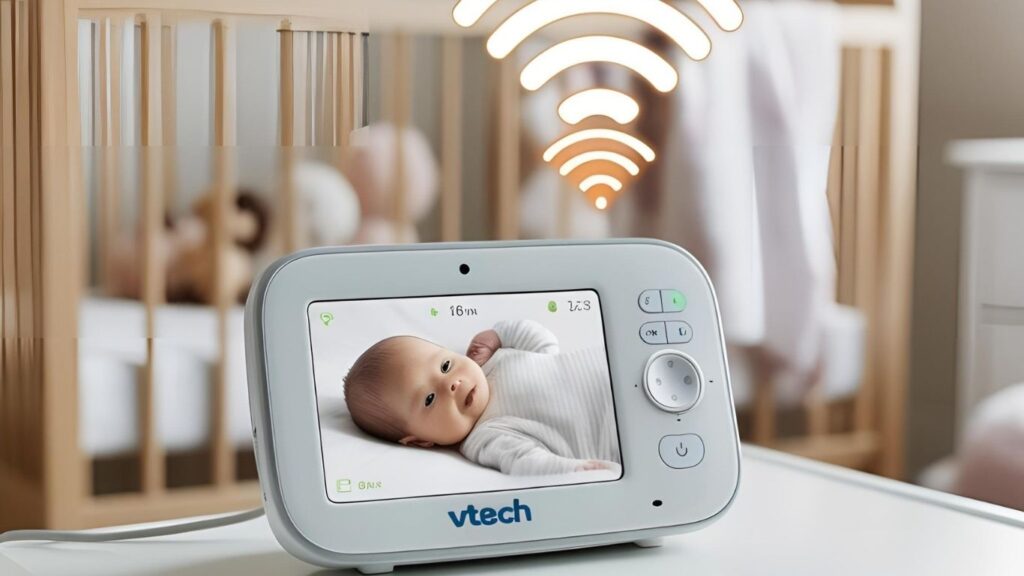
This is where most parents land. Non-Wi-Fi video monitors use secure signals that don’t require internet and stay stable through walls. Brands like Hellobaby and Babysense video monitors fall into this category.
Wi-Fi baby cams have unlimited distance—but different limits.
Wi-Fi monitors can work from anywhere, even away from home, but only if your internet is strong. When Wi-Fi drops, so does your connection, which can be stressful at night.
Do Baby Monitors Work Long Distance?
Yes—but only in specific ways.
Baby monitors work “long distance” either through strong local signals or through Wi-Fi. They are not walkie-talkies designed for miles of direct range.
For most parents, long distance means inside the home.
If you want to monitor from the yard, basement, or garage, a long-range non-Wi-Fi monitor works best. That’s what most parents actually need day to day.
Baby monitors are not designed for miles away use.
Without Wi-Fi, distance is limited by physics. With Wi-Fi, distance depends on internet quality, not the camera itself.
For away-from-home use, Wi-Fi is the only option.
If you travel or step out often, a Wi-Fi baby cam makes sense as a secondary setup, not always a replacement.
Best Long-Range Baby Monitors (No Wi-Fi & Wi-Fi Options)
If you’re asking what baby monitor has the longest range, these stood out in real homes, not just on paper.
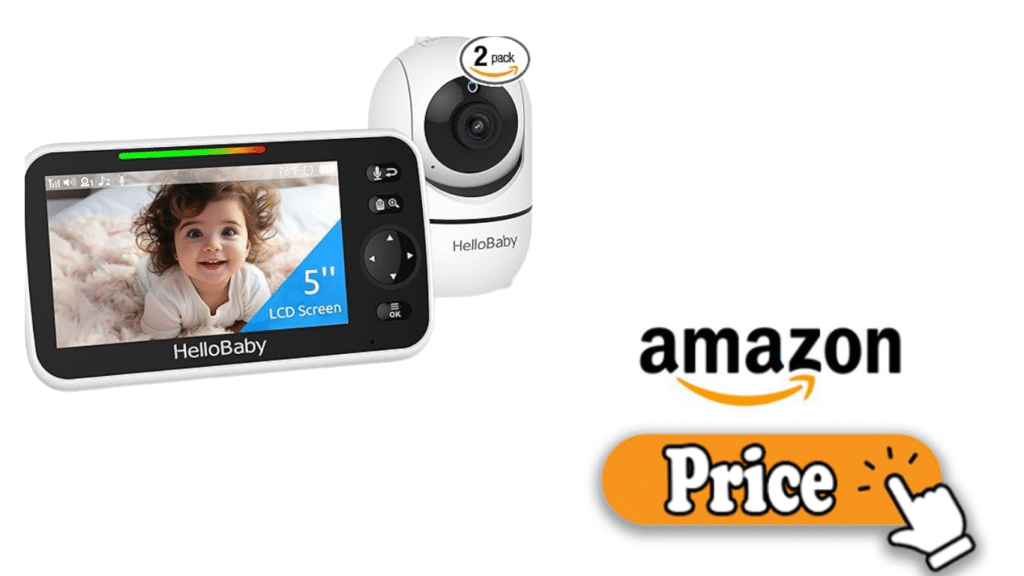
Best Overall Long-Range Baby Monitor (No Wi-Fi): Hellobaby
Hellobaby offers one of the most reliable long-range connections I’ve used.
It held signal across floors and into the yard without sudden drops. That matters when you’re trying to relax instead of staring at the screen.
Battery life is strong for overnight use.
Many Hellobaby models use a large battery, close to a 5000mAh capacity, which lasts through the night without panic charging.
Temperature monitoring adds peace of mind.
It quietly alerts you if the room gets too hot or cold, which helps protect baby sleep without constant checking.
Best for parents who want simple, reliable, non-Wi-Fi monitoring.
Longest Range Baby Monitor I’ve Tested: Luvion Icon Long Range Baby Monitor
Luvion Icon lives up to its long-range reputation.
In open space, it came close to its claimed range. Indoors, it stayed stable farther than most competitors.
Signal stability is its biggest strength.
Even with walls and appliances running, the video stayed clear without constant reconnecting.
Active noise reduction keeps sound calm.
It quiets background noise so you hear your baby, not every tiny hum in the room.
Best for larger homes where signal drop is a real issue.
Best Budget Long-Range Baby Monitor: Bonoch Long Range Baby Monitor
Bonoch delivers solid range at a lower price.
It doesn’t feel cheap, and the connection stayed steady in small to medium homes.
Screen quality is clear enough for peace of mind.
You won’t get luxury visuals, but you can clearly see and hear your baby.
Best for parents who want value without sacrificing range.
Best Long-Range Baby Monitor for Simple Setup: Jartoo Baby Monitor
Jartoo is true plug-and-play.
No apps, no accounts, no Wi-Fi setup. It works right out of the box.
Non-Wi-Fi reliability makes it stress-free.
The signal stays steady without relying on your internet or router location.
Ideal for grandparents, travel, or backup monitoring.
It’s simple, clear, and dependable when you just want things to work.
Wi-Fi vs Non-Wi-Fi Baby Monitors for Range
Short answer: non-Wi-Fi baby monitors usually have better local range.
I didn’t believe this at first, but after testing both types, the pattern was clear. When you’re moving around the house, non-Wi-Fi monitors stay connected more often.
Why Non-Wi-Fi Monitors Have Better Local Range
Non-Wi-Fi monitors use FHSS technology for direct connection.
FHSS sends the signal straight from the baby cam to the parent unit. It doesn’t bounce through a router, which keeps the connection stable.
They don’t depend on your internet at all.
If your Wi-Fi slows down, a non-Wi-Fi monitor doesn’t care. This makes brands like Hellobaby and Babysense video monitors feel more reliable day to day.
They are often more reliable at night.
At night, Wi-Fi traffic spikes with phones, TVs, and updates. Non-Wi-Fi monitors avoid that noise and keep background sound quiet.
When Wi-Fi Baby Monitors Make Sense
Wi-Fi baby monitors work best when you are away from home.
If you want to check in from work or while traveling, Wi-Fi is the only option. Distance becomes unlimited as long as the internet works.
They are useful for travel or shared caregiving.
Grandparents or caregivers can log in easily. Brands like VTech and Panasonic offer Wi-Fi baby monitors with app access.
Wi-Fi works well as a secondary monitor.
Many parents pair a Wi-Fi camera with a non-Wi-Fi monitor. Sense-U, for example, focuses more on sensors than cameras, so it works best as an add-on.
Brand Comparison – Real-World Range & Reliability
Short answer: claimed range matters less than stable indoor range.
This table reflects real-world use in homes, not lab testing.
| Brand / Model Type | Claimed Range | Stable Indoor Range | Wi-Fi Required | Temperature Monitoring | Battery Capacity |
| Hellobaby | Up to 1,000 ft | 200–300 ft | No | Yes | ~5000mAh |
| VTech baby monitors | 1,000 ft | 150–250 ft | Some models | Yes | 3000–4000mAh |
| Panasonic baby monitors | 1,000 ft | 150–250 ft | Some models | Limited | 3000–4000mAh |
| Babysense video monitors | 900–1,000 ft | 200–300 ft | No | Yes | ~4000mAh |
| Esquim baby cam | Varies | 100–200 ft | Usually Yes | Varies | Varies |
Indoor range is the number that truly matters.
Most homes fall between 150 and 300 feet of stable signal, even with excellent range claims.
What Affects Baby Monitor Range the Most?
Short answer: walls and layout matter more than brand names.
I’ve seen expensive monitors struggle in old houses with thick walls.
Wall materials can block signals fast.
Brick, concrete, and metal reduce range more than drywall. Older homes often have more signal loss.
House size and layout change everything.
Long hallways, basements, and multiple floors weaken signals. Open layouts perform better.
Other wireless devices compete quietly.
Routers, baby cams, cordless phones, and even microwaves add interference.
Placement can improve range instantly.
Place the camera high and away from metal. Keep the parent unit off the floor for better reception.
My Personal Recommendation (Based on Real Use)
Short answer: the “best” monitor depends on how you live.
There is no one perfect option for every home.
For apartments, most monitors work well.
Even budget options like Bonoch usually have enough range indoors.
For large homes, go non-Wi-Fi first.
Hellobaby or Luvion Icon handles distance and walls better.
For yard or garage use, range is critical.
Non-Wi-Fi monitors stay connected where Wi-Fi often fails.
For traveling parents, Wi-Fi adds flexibility.
Use it as a backup, not your only monitor, for peace of mind.
FAQs – Long-Range Baby Monitors
What baby monitor has the longest range?
Non-Wi-Fi video monitors like Hellobaby and Luvion Icon usually offer the longest local range, reaching up to 1,000 ft outdoors and staying stable indoors. Learn more about top picks above.
How far can a baby monitor reach without Wi-Fi?
Most non-Wi-Fi baby monitors reach 800–1,000 ft in open space, but indoors the usable range is usually 150–300 ft, depending on walls and interference. Learn what affects range most.
Do long-range baby monitors work through walls?
Yes, long-range baby monitors work through walls, but thick concrete or brick reduces signal fast. Expect less range indoors than outdoors. Learn how placement improves performance.
Is a Wi-Fi baby monitor better for long distance?
Wi-Fi baby monitors are better for long distance when you’re away from home, but they rely on internet quality. For in-home use, non-Wi-Fi models are often more reliable.
What’s the most reliable non-Wi-Fi baby monitor?
Hellobaby is one of the most reliable non-Wi-Fi baby monitors for range, battery life, and temperature monitoring. It performs well in real homes. Learn why parents trust it.
Final Verdict – Which Long-Range Baby Monitor Should You Choose?
Short answer: the best long-range baby monitor is the one that fits how you live, not just the specs.
After testing different setups, I’ve learned that real range matters more than big numbers on a box. Non-Wi-Fi monitors give the most stable signal at home, while Wi-Fi models help when you’re away. Once you match the monitor to your space and routine, everything feels calmer.
Here’s how I’d choose based on real life:
- Apartments or small homes: A budget non-Wi-Fi monitor like Bonoch usually has enough range and keeps things simple.
- Large homes or thick walls: Hellobaby or Luvion Icon offer stronger, more reliable indoor range.
- Yard or garage use: A non-Wi-Fi long-range monitor holds signal better than Wi-Fi.
- Traveling parents: Add a Wi-Fi baby cam for check-ins away from home, not as your only monitor.
My best advice: trust real-world use over marketing claims.
Focus on stable indoor range, battery life, and ease of use. If you want help narrowing it down, explore my comparison guides, in-depth reviews, or a simple buying checklist to choose with confidence.
