
The first night I brought my newborn home, I stared at the bassinet more than the baby—wondering, is the MamaRoo bassinet safe for sleep or just another fancy baby product. Like most parents, I was torn between soothing motion and the fear of unsafe sleep, especially after hearing mixed opinions about baby swings versus a true baby bassinet. I dug into research, tested the 4moms MamaRoo myself, and watched how my baby actually slept—during naps, overnight, and those fragile early weeks. In this honest bassinet review, I’ll share what I learned about safety, overnight use, and real-life pros and cons. If you’re deciding whether this newborn bassinet fits your family, let’s walk through it together.
What Is the 4moms MamaRoo Sleep Bassinet?
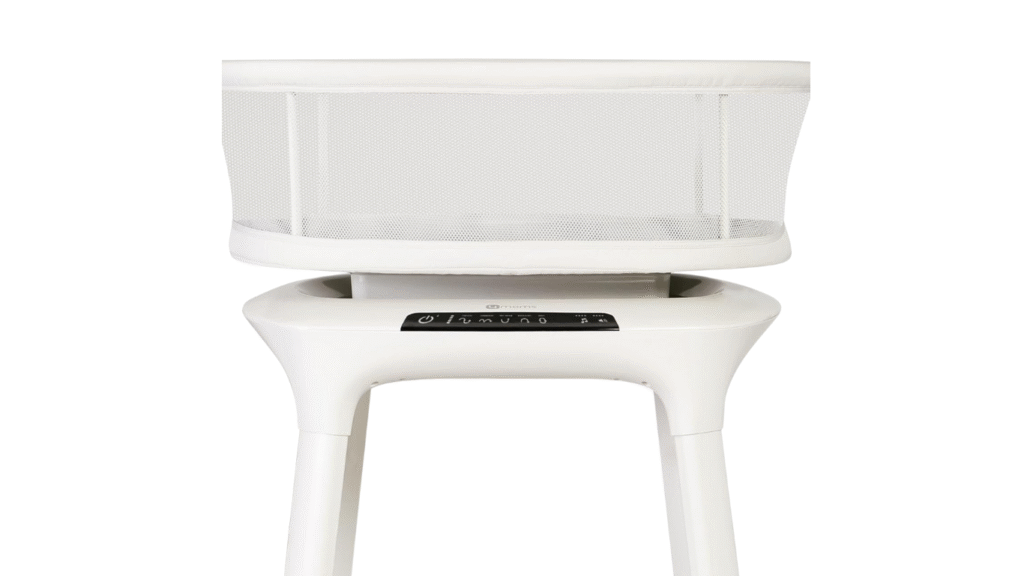
At its core, the 4moms MamaRoo Sleep Bassinet is a smart newborn bassinet designed to mimic gentle parent-like motion while keeping sleep safe. Think of it as a calm rocking hug, but on a flat, firm surface made for baby sleeping. It’s built for newborns and young infants who need soothing without sacrificing safety. In short: it’s a baby bassinet first, tech product second.
A big point of confusion is the MamaRoo infant swing vs bassinet question. The baby swing is for awake time and soothing, while the MamaRoo bassinet is made for sleep. Swings cradle babies in a seated position, but this moms bassinet keeps your baby fully flat on their back. That difference matters a lot for safe sleep and peace of mind.
This infant bassinet is designed mainly for newborns through the early months. It works well for families who want their baby close at night without bed-sharing. In real life, it fits easily into modern routines—late-night feeds, quick diaper changes, and easing a newborn back to sleep without pacing the room.
Is the MamaRoo Bassinet Safe for Sleep?
Yes—the short answer many parents want is that the MamaRoo bassinet is safe for sleep when used as directed. It’s built to meet current infant sleep safety standards and avoids the risks tied to baby swings. Safety comes from both design and how parents use it. That balance is what truly matters.
Safety Standards and Certifications
The MamaRoo Sleep Bassinet follows AAP safe-sleep guidance, meaning a flat surface and a firm mattress for newborn sleep. There’s no incline, which helps reduce risks tied to breathing and positioning. That single feature already places it ahead of many motion-based baby products.
It also meets JPMA and CPSC safety standards, which cover stability, materials, and overall construction. The breathable mesh sides allow airflow while still keeping the baby secure. In simple terms: it’s built like a proper newborn bassinet, not a dressed-up swing.
My Personal Experience With Baby Sleeping in the MamaRoo
From my own use, what stood out first was how naturally my baby settled. The motion felt gentle, not mechanical, and my newborn stayed on their back without sliding or curling. That alone helped answer my early worry: Is it okay for a baby to sleep in a MamaRoo? In our case, yes—when used correctly.
Over time, I noticed longer stretches of baby sleeping, especially during naps and early nights. I also slept better because I wasn’t constantly checking positioning or breathing. The biggest takeaway was peace of mind—something every tired parent needs as much as sleep itself.
Is the MamaRoo Sleep Bassinet Safe for Overnight Sleep?
Short answer: Yes, the MamaRoo Sleep Bassinet can be used overnight when it’s set up correctly and used as directed. This is one of the first questions I had during those foggy newborn nights. I wanted comfort for my baby and safety for my peace of mind. What helped most was understanding how the motion works and when to let the bassinet rest.
Motion Settings and Auto-Shutoff Explained
Quick takeaway: The motion is optional, controlled, and designed with limits.
The MamaRoo bassinet offers gentle movement, but it isn’t meant to rock nonstop without thought. You can choose continuous motion or timed settings, which helps prevent overstimulation. In my experience, I used motion to help my baby settle, then turned it off once sleep kicked in—like rocking a stroller and then stopping once the baby drifts off.
When to turn motion off: Once your newborn is asleep and calm, motion isn’t required for safe sleep. Overnight, I treated motion as a tool, not a crutch. That approach matched both common-sense parenting and safe-sleep guidance.
Safe Sleep Positioning for Newborns
Clear answer: Babies should always sleep on their backs in the MamaRoo bassinet.
The bassinet’s flat, firm mattress supports safe positioning, which is key for newborn sleep. I never placed my baby on their side or tummy, even during short naps. That consistency made nighttime routines feel safer and more predictable.
Keep it empty: No pillows, toys, or loose blankets—ever. I followed the same rule here as I would with any infant bassinet. A swaddled baby on their back, on a clear surface, is still the gold standard for safe overnight sleep.
Is It Okay for a Baby to Sleep in a MamaRoo?
Short answer: Yes, it’s okay for a baby to sleep in a MamaRoo bassinet—not the swing.
This distinction matters more than most people realize. The MamaRoo infant swing is for soothing while awake, while the MamaRoo bassinet is built specifically for sleep. That difference alone answers many safety concerns.
Why bassinets are safer than swings: Swings keep babies in a reclined position, which isn’t meant for unsupervised sleep. A baby bassinet keeps your newborn flat, supported, and aligned. From a safety view, that’s a major upgrade.
When it’s appropriate: The MamaRoo bassinet works best for newborns and early infants who haven’t started rolling. Once your baby shows signs of rolling or pushing up, it’s time to plan a move to a crib. Until then, it’s a solid, sleep-safe option.
How We Tested Bassinets
Bottom line: Real-life testing matters more than specs alone.
I tested the MamaRoo the same way exhausted parents use it—during naps, overnight sleep, and those 3 a.m. wake-ups. I paid attention to how quickly my baby settled and how easily they stayed asleep. That everyday use tells you more than any product sheet.
What we compared: I focused on motion smoothness, mattress firmness, airflow from the mesh sides, and noise level. The MamaRoo stayed quiet, stable, and breathable—three things that matter when a baby is sleeping inches from your bed.
Why testing matters: A bassinet can look great on paper but fail in real life. Testing helps answer real questions like, Can I trust this at night? and Will my baby stay comfortable without constant adjustment? In this case, hands-on use backed up the safety claims.
Is a Bassinet the Safest Sleep Option?
Short answer: Yes, for most newborns, a bassinet is one of the safest sleep options when used correctly. Compared to a crib or a baby swing, a bassinet offers closeness without added risk. That early stage is all about simplicity and safety. Less space, fewer extras, better sleep.
Bassinet vs crib vs swing: Cribs are safe but often feel big and distant in the newborn phase. Swings can soothe, but they are not designed for unsupervised sleep. A bassinet sits right in the sweet spot—flat, firm, and close enough that you can check on baby sleeping with half-open eyes at 2 a.m.
What pediatric guidance supports: Pediatricians often recommend a newborn bassinet for room-sharing in the first months. It lowers the risk of unsafe sleep habits while making nighttime care easier. From experience, having my baby within arm’s reach made feeds calmer and sleep smoother for both of us.
Why bassinets work early on: Newborns crave closeness and gentle transitions. A bassinet supports that need without extra stimulation. It’s like training wheels for sleep—supportive, steady, and meant for the early ride only.
How Long Can a Baby Stay in a Bassinet?
Quick answer: Most babies use a bassinet for about 3–6 months, depending on growth and movement. Weight limits matter, but behavior matters even more. Once babies start rolling, it’s time to rethink sleep space. Safety always comes first.
Age and weight limits: Most infant bassinets, including the MamaRoo, are designed for newborns up to a specific weight set by the manufacturer. Always follow those limits closely. I treated them as a hard stop, not a suggestion.
Signs your baby has outgrown it: Rolling, pushing up, or trying to sit are clear signals. My baby started wiggling more, and that was my cue. Even if weight was still within range, movement told the real story.
Transitioning to a crib: Moving from bassinet to crib doesn’t have to be scary. Keeping the same bedtime routine helps a lot. We treated it like changing rooms, not changing rules—and the adjustment was smoother than I expected.
Pros and Cons of the MamaRoo Bassinet
Pros
Short answer: The MamaRoo shines at soothing without breaking safe-sleep rules.
The gentle motion helps calm newborns while keeping a flat, firm surface. That balance is hard to find in baby gear.
Soothing motion options: The movement feels natural, not jerky. It reminded me of slow pacing during late-night fussiness. Helpful, but not overwhelming.
Flat, firm sleep surface: This is the biggest win. Baby sleeping stays aligned with safe-sleep guidance. No incline, no guesswork.
App control convenience: Adjusting settings without bending over felt like a gift during recovery weeks. Small thing, big relief.
Ideal for newborns: It fits best during those early months when sleep is fragile and routines are forming.
Cons
Short answer: It’s not perfect—and it’s not forever.
The price and short usage window can be tough for some families.
Higher price point: It costs more than basic bassinets. For me, the safety and features justified it, but budget matters.
Limited use window: Like all newborn bassinets, it’s temporary. You’ll need a crib sooner than you think.
Not for rolling babies: Once babies roll, swaddled or not, this is no longer the right space. That transition timing is important.
Why We Like It
Bottom line: It helps tired parents without cutting corners on safety.
The MamaRoo bassinet supports sleep when energy is low and nerves are high. That alone has value.
Real-life benefit: It calmed my newborn without relying on unsafe positions or constant holding. That balance gave me short breaks to rest.
Works with routines: Swaddling the baby, feeding, settling—it all flowed easily. The bassinet didn’t fight our routine. It supported it.
But Take Note
Quick reminder: No bassinet replaces safe habits.
The MamaRoo works best when parents follow safe-sleep basics every time.
When not to rely on motion: Motion is a helper, not a fix-all. If your baby is overtired or uncomfortable, motion won’t solve the root issue.
Supervision still matters: Even with a safe infant bassinet, awareness is key. Trust the product, but trust your instincts more.
The Details
Weight limit: Follow the manufacturer’s stated maximum closely. This is non-negotiable for safety.
Size and placement: It fits well beside most beds, making room-sharing easy without crowding. That closeness helped me rest easier.
Noise level: The motion stayed quiet enough not to disrupt sleep. No sudden sounds, no surprises.
App features: Simple controls, easy adjustments, nothing complicated. That matters when you’re half-asleep.
Cleaning and care: The mattress cover and fabrics are easy to remove and clean. In the newborn stage, that’s a must.
Frequently Asked Questions
Lorem ipsum dolor sit amet, consectetur adipiscing elit. Ut elit tellus, luctus nec ullamcorper mattis, pulvinar dapibus leo.
Is the MamaRoo Sleep Bassinet safe?
Yes. The MamaRoo Sleep Bassinet is designed for safe sleep with a flat, firm surface and breathable sides when used as directed. Learn more about why design matters.
Can a newborn sleep in the MamaRoo overnight?
Yes, a newborn can sleep in the MamaRoo overnight if placed on their back with no loose items. Learn more about overnight motion use and safety tips.
Is the MamaRoo safer than a baby swing?
Yes. The MamaRoo bassinet is safer than a baby swing because it keeps babies flat for sleep. Swings are for awake time only. Learn more about the difference.
Should babies be swaddled in the MamaRoo bassinet?
Yes, babies can be swaddled in the MamaRoo bassinet if they are not rolling. Always place them on their back. Learn more about safe swaddling.
When should babies stop using the MamaRoo bassinet?
Babies should stop using the MamaRoo bassinet once they reach the weight limit or start rolling. Learn more about signs it’s time to switch to a crib.
Final Verdict – Is the MamaRoo Bassinet Safe for Sleep?
Short answer: Yes, the MamaRoo bassinet is safe for sleep when used as directed and with safe-sleep habits. It offers a flat, firm surface and gentle motion that supports newborn sleep without the risks linked to baby swings. From both research and real-life use, it balances comfort and safety well.
Who it’s best for: This bassinet works best for parents with newborns who want safe sleep with light soothing help. It’s especially helpful for room-sharing families and for those early months when babies need calming but close supervision. If you value convenience without cutting safety corners, it’s a strong choice.
Who may want alternatives: If you’re on a tight budget, plan to use a bassinet long-term, or already prefer a crib from day one, another option may suit you better. Babies who are rolling or close to weight limits will also outgrow it quickly. In those cases, transitioning sooner makes sense.
Reassuring close: No bassinet is magic, but safe design matters. When paired with back sleeping, an empty sleep space, and attentive care, the MamaRoo bassinet supports healthy, secure newborn sleep. Trust the guidelines, watch your baby, and follow your instincts—you’re doing better than you think.
Pingback: Are Dream On Me Baby Crib Mattresses Good? An Honest, Real-World Look - Moms Pal